Alaska 2017
WRANGELL
DAY 5 : TUESDAY SEPT 26, 2017
As mentioned, while I hid out for the day, my travel companions were able to enjoy the visit to Wrangell.
Wrangell is a small borough located on the northeast corner of Wrangell Island with a population of 2,127 people as of the 2020 census. Its history started when it was founded by Russians and is one of the oldest non-Native settlements in Alaska. The area was originally populated by the Tlingit people who traded furs with the Russians and later the Hudson’s Bay Company. The fur trade ended when the area’s stocks of sea otter and beaver were depleted after 1849. It remained under British occupation until the US bought Alaska in 1867. After that, it was a fort for the US and eventually was a trading post for the gold rushes between 1861 and 1897. Wrangell’s complex history continued after that, and you can read more on the weblinks I have supplied.
Near Wrangell is the Petroglyph Beach State Historic Park, which my friends visited. There are at least 40 petroglyphs in the boulders and bedrock outcrops on the shore. It is thought that the 8,000-year-old petroglyphs were created by the Tlingit tribe. They depict whales, salmon, and faces from the community. It is important to know that the petroglyphs are only visible at low tide as they are on the shoreline and not in the clfifs.
My friends also were able to attend a guided visit and talk in Chief Shakes Tribal House in Wrangell. The house is a replica of the traditional Tlingit clan house of the Naanyaa.aayi Clan. I understand that the chief himself gave the talk during their tour.
My friends also commented about the totem poles located at the house. While the totem poles were originals, many have been removed for preservation and are kept in a ‘carving shed’ where master carvers are working to create accurate replicas.
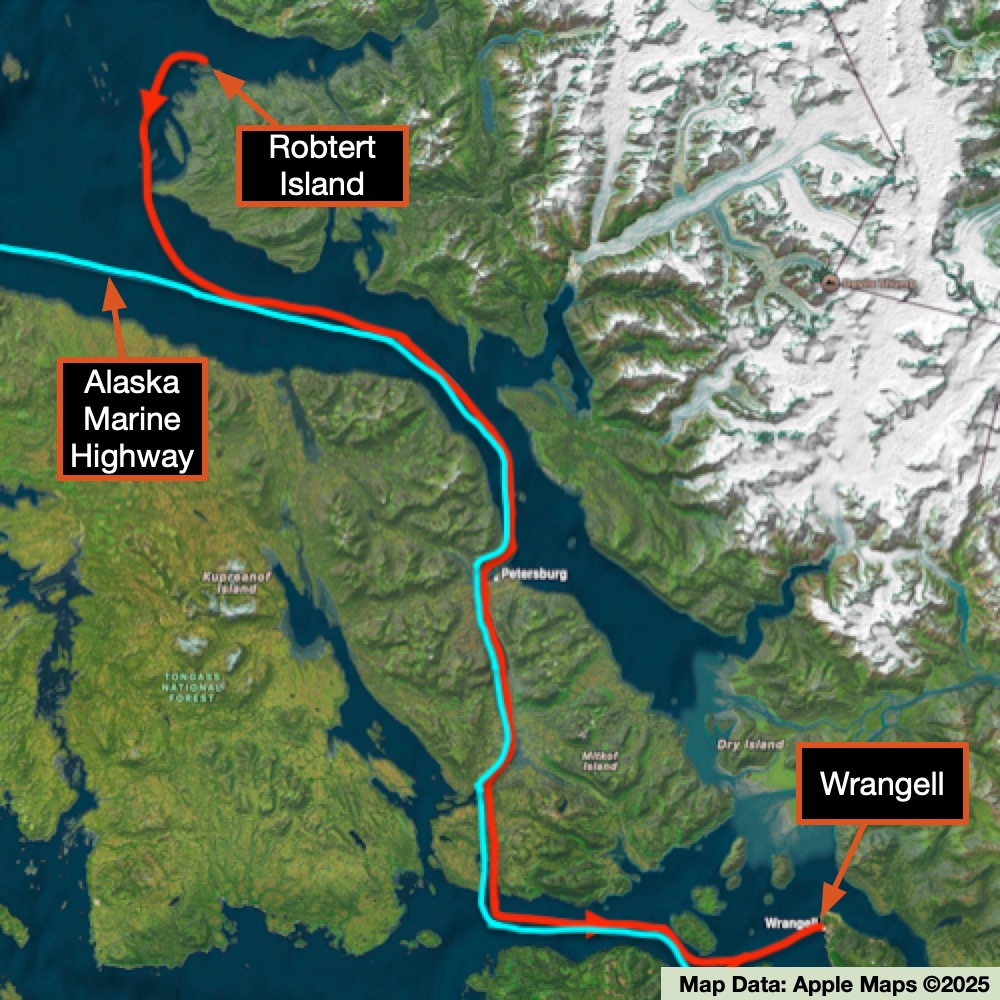
At the end of the day, our ship left dock and headed out towards our next day’s adventures.
VIEWING HELP
To close this window, click the X in the upper right hand corner. Or click anywhere outside of this window's area.
Photos from each day are shown in thumbnail (small) form. Panoramas are either wide or tall images, while normal photos are small rectangles. All photos shown in the PHOTO SHOWCASE section can be enlarged for better viewing. Photos will enlarge to fit your browser window width. Therefore, to view them at larger sizes simply make your browser window wider.
If there is any issue or the need to inquire/comment about an image, please refer to the Image ID label (see below) of the specific image along with the trip name found at the top of the browser window.
Video Clips
Depending on the browser, some of the controls may not always be supported.
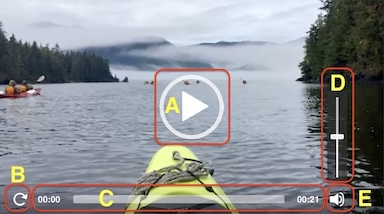
Most videos will start playing automatically. Sound is automatically off even if included with a video. See D, E below for sound control.
A few small videos are set to loop endlessly, while most just play to the end.
- A: To start or stop a video, click in this area (even if the symbol is not visible)
- B: If a browser shows this symbol, clicking on it will restart the video from the beginning
- C: Progress bar - will display total video time on the right.
- D, E: This seems to have the most variants between browsers. If the video description says 'w/ sound’, you can adjust the volume with this control
If neither is visible, move the cursor to the E area and either E and/or D will be visible
If E is visible but not D, click on E
Once D is visible, slide the bar up or down to adjust the volumn
Panoramas
Clicking anywhere on a panorama thumbnail will cause the image to expand to fill the browser width. Clicking again anywhere in the browser window or scrolling the browser window will cause the expanded image to shrink back to its smaller thumbnail size.
The Image ID and description is found just below the thumbnail image on the left side.
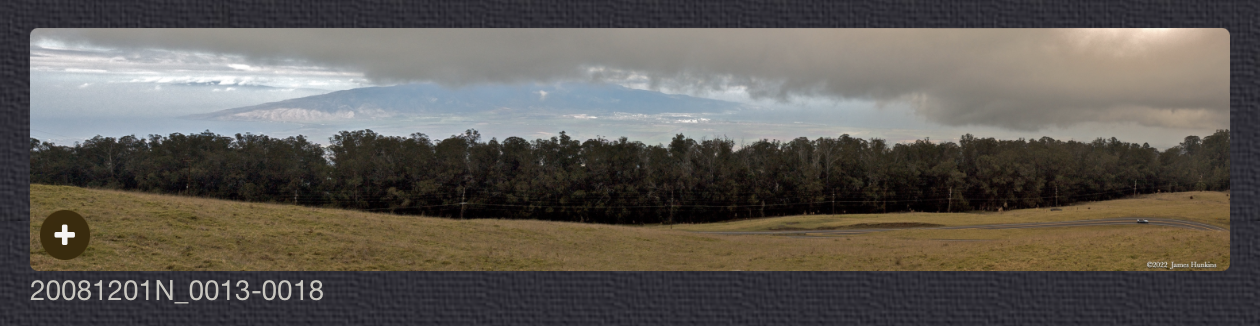
Individual Photographs
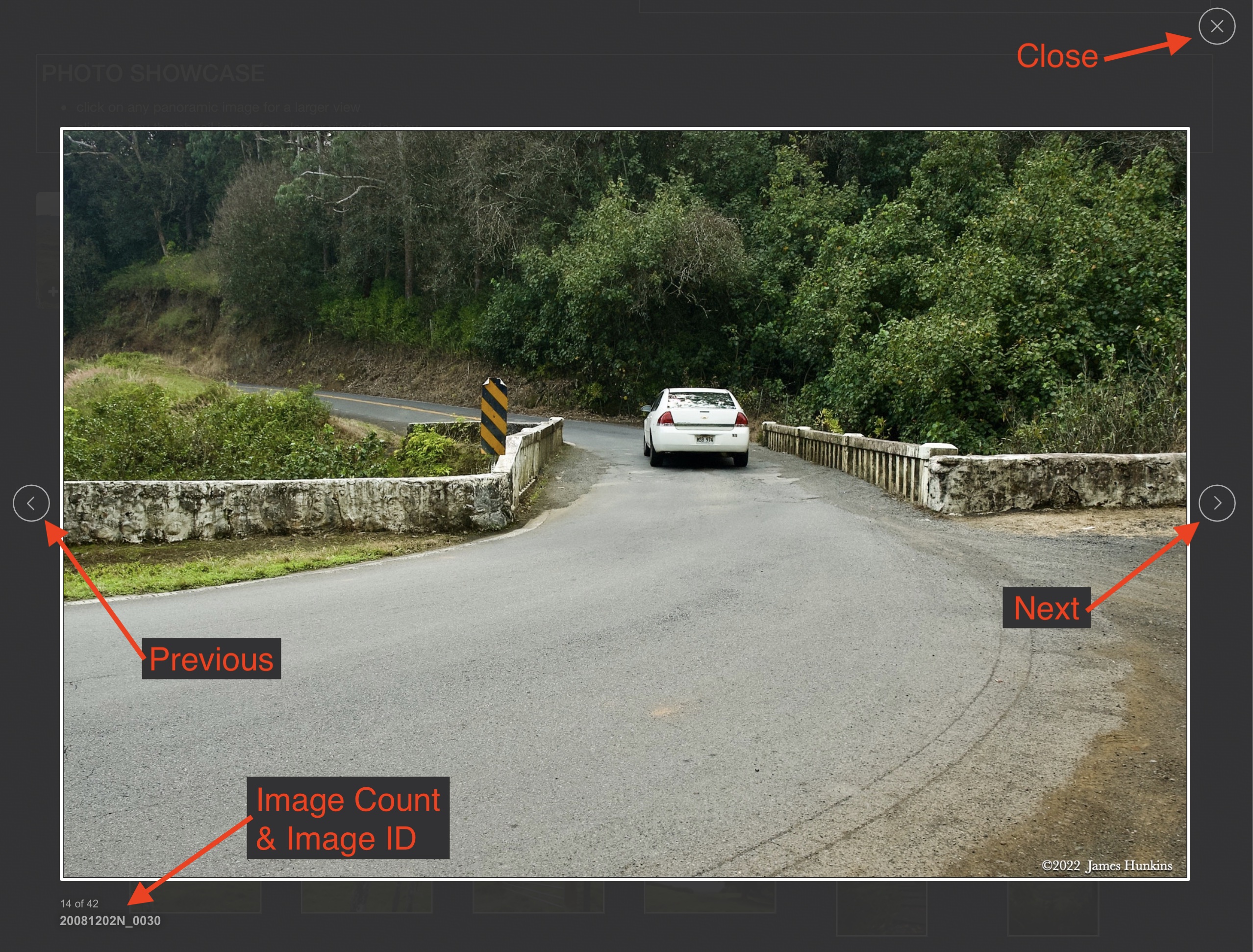
If you click on any photo thumbnail, it will open a larger viewer which can be used to walk through all of the standard photos on the page. Once open, to go forward click on the > on the right side of the enlarged image. To scan backwards, click on the < on the left side. To close the larger images either click on the X in the upper right hand corner of the browser window or anywhere outside of the enlarged image.
The Image ID label can be found by hovering a cursor over the thumbnail image (may not be available on some tablets/phones) or, once enlarged, from the lower left hand side just under the image.
Additionally, in the same area as the Image ID (or the upper left corner for newer/updated sites) a count showing the current image number versus the total number of images available for viewing.

For newer or updated sites (look for the orange checkbox in the header of a sites main page), additional buttons have been added when viewing a full size image. From left to right, the buttons are:
- Email: will open an email with information and a link to the current image
- WhatsApp: if WhatsApp is on your system, will open a browser window to open WhatsApp and create a message with information and a link to the current image
- FaceBook: Will open a browser window to open Facebook and create a message with information and a link to the current image
- full screen: will take over the entire display versus just the browser in most systems; ESC returns to the brower only mode
- magnify: enlarges the image within the browser or full screen; if the image is larger than can be displayed it can be scrolled
- exit: will close the large image viewer returning to the thumbnails